Korea Market Entry / Insights
Korean business culture · 10 min read
Korean Business Culture in 2026: Nunchi, Meeting Habits and What Has Actually Changed
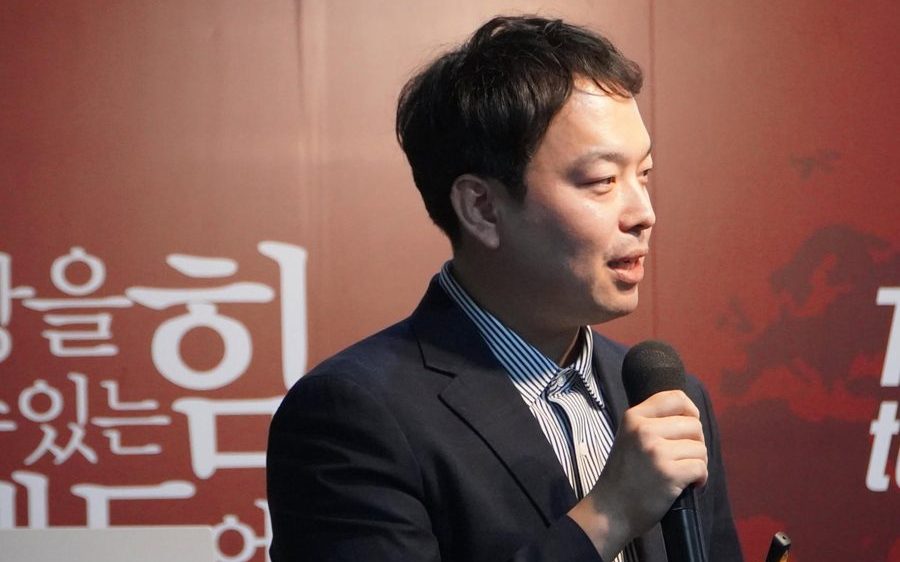
Foreign teams arrive in Seoul with a good product and a poor map of how Korean companies actually talk, meet and decide. The classic advice is half right: hierarchy and nunchi still shape every first meeting. The other half is out of date, because after-work dinners and overtime are fading and younger employees work more like their peers in the West. This guide separates what still applies from what has changed, based on eleven years of working with Korean and foreign companies. A live interview I gave on the subject is embedded below.
Live interview: Korean Business Etiquette and Networking Insights with Brian Yoo, Borderless Business Secrets Ep. 2 (host Hyein Yoon). The embed opens at 41:16.
01
Why culture decides your first three meetings
When a foreign company enters Korea, the product and the price usually get all the preparation. The culture gets none. Then the first meeting ends without a clear answer, the follow-up email sits unread for two weeks, and the foreign team starts to think the Korean side is not interested.
In my experience, most of those cases are not rejection. They are normal Korean business behavior that nobody explained. I have worked with Korean and foreign companies for more than eleven years, and I was a country manager and APAC sales director before I became a consultant. The same five or six misunderstandings come up again and again.
This guide covers the habits that still matter in 2026: nunchi, hierarchy, how decisions travel inside a company, how meetings run, and the small rules of a first meeting. Then I cover the part most English guides skip, which is what has changed. Several things you may have read about Korean offices are fading fast, and treating Korea like it was in 2005 is its own mistake.
02
Nunchi: reading the room is part of the job
Nunchi (눈치) is the ability to read what people feel and want without being told. Koreans learn it from childhood. At work it means that a lot of information is carried by tone, silence and what is left unsaid.
The most common example for foreign teams is the soft no. A Korean manager rarely says no in a meeting. You hear phrases that translate as "we will review it internally", "it is a little difficult" or "let us think about it more". The meaning depends on the face, the pause and whether a next step is named. If nobody offers a date for the next conversation, treat the answer as closer to no than to yes.
The same skill works in your favor. A Korean counterpart who sees that you noticed a delicate point, for example that a junior colleague was not given room to speak, or that the senior person was not asked first, will trust you faster than one who only delivered a perfect deck.
- Ask one direct question at the end of a meeting: what would you need to see in order to take this to your team? It gives your counterpart a polite way to say what is blocking them.
- Do not push for a yes in the room. Ask for the next step and a date.
- Notice who speaks first and who stays silent. The silent person is often the one whose approval matters.
03
Hierarchy and how a decision travels
Korean companies are more hierarchical than most Western companies, and the effect on deal speed is large. The person you meet is often a practitioner, such as a team member in charge of a category or a project. That person usually cannot say yes alone.
A typical path in a mid-size or large company looks like this: the practitioner meets you, writes an internal report, the team leader reviews it, a department head or executive approves it, and sometimes another department checks the contract or the budget. Each step takes days to weeks. The reports are written in Korean, so the quality of your Korean-language material decides how well your case travels without you in the room.
This is why I tell foreign companies to treat the first meeting as the start of a documentation job. Your counterpart is not only evaluating you. They are collecting what they need to persuade their boss.
- Send a short Korean or bilingual one-pager after every meeting, so your counterpart can forward it as it is.
- Write the price, the minimum order, the timeline and the next step in plain numbers. A report with a vague line is hard to approve.
- Ask who else will see the report. If the answer is a department head, ask whether they would like a short call with that person.
- Expect two to four weeks between a good meeting and a written reply in a larger company. Small companies and startups move in days.
04
How Korean meetings actually run
A meeting in Korea often has two layers. The visible layer is the agenda: introductions, a presentation, questions. The second layer is the relationship check, which happens in the first ten minutes and again at the end.
Introductions take longer than a foreign team expects. People exchange business cards, read the title and the company, and place each other in the hierarchy. A senior person usually opens and closes the meeting. A junior person may take notes and say very little, even if they know the subject best.
Decisions are often not made in the meeting. The meeting gathers information and measures trust. The decision happens afterward, in internal conversations you cannot see. This is why a meeting that felt flat can still lead to a deal, and a meeting that felt warm can still lead to nothing.
- Send the deck one day before. Many Korean teams like to read first and ask questions in the meeting.
- Bring more printed or digital copies than the number of people you expect. Extra people often join at the last minute.
- Keep your presentation to about twenty minutes, then leave room for questions. A long monologue reads as pushing.
- Close with a written summary of the agreed next steps within 24 hours.
05
First meeting basics that still apply
Some rules are old and still useful, because they are cheap to follow and signal respect.
- Business cards: offer and receive with two hands, read the card for a moment, and place it on the table in front of you during the meeting instead of putting it straight into a pocket.
- Titles: use the title and the surname or full name, for example Director Kim, not a first name, until the Korean side invites it.
- Seating and order: let the Korean host guide seating. The senior person on each side usually sits across from each other.
- Punctuality: arrive ten minutes early. Seoul traffic is hard to predict, so build in a buffer.
- KakaoTalk: many Korean professionals prefer KakaoTalk or a text message for quick scheduling, and email for documents. LinkedIn is increasingly accepted for first contact, especially in tech, startups and global teams.
None of these will win a deal. They only remove reasons to be dismissed.
06
What has changed: hoesik, overtime and the new generation
Here is the part I want foreign teams to hear from someone who works in Korean offices every week. The image of a Korean workplace as a place of unlimited overtime, mandatory dinners and top-down orders is losing accuracy.
Working hours are the clearest change. Korea introduced a 52-hour weekly cap in 2018, covering regular and overtime hours, and phased it in for smaller companies afterward. Late nights still exist in some industries, but the default expectation has moved.
Hoesik (회식), the after-work company dinner with heavy drinking, was once treated as part of the job. A 2019 survey cited by the Korea Economic Institute of America found that 64.5 percent of respondents said they could decline hoesik. In my own work, I see the shift every year. Many teams now choose a lunch, a short coffee or a daytime activity, and younger staff skip dinners without penalty. Foreign visitors are no longer expected to drink with their counterparts to prove commitment.
Individualism is stronger among employees in their twenties and thirties, and I see clear influence from Western workplace norms. Younger Koreans expect clear job descriptions, direct feedback, work hours that end, and a manager who explains the reason behind a task. Workplace harassment has been regulated by law since July 2019, and large companies in particular now run mandatory training.
What has not changed as quickly is the approval chain. Even in a flat startup, a decision that costs money often goes up to the founder or a team lead. The tone is more casual than before, but the path is still there.
07
How to adjust: a simple rule by company type
| Company type | What to expect | What to do |
|---|---|---|
| Large company or chaebol affiliate | Formal tone, longer approvals, reports in Korean | Send a Korean one-pager, plan for weeks, ask who approves |
| Mid-size company | Mixed. The CEO often decides | Aim to meet the decision maker early, keep documents short |
| Startup | Casual tone, fast replies, English is common | Use KakaoTalk or LinkedIn, move quickly, avoid heavy formality |
| Public institution | Process-driven, rules and forms matter | Ask for the exact submission format at the start |
Generation matters as much as company size. A director in his fifties and a manager in her thirties in the same company can expect different things from you. Watch both.
08
Your first ninety days: a practical plan
- Week 1 to 2: prepare a two-page Korean or bilingual company summary and a one-page offer with numbers.
- Week 2 to 4: ask for introductions through someone both sides trust. A warm introduction through a mutual contact beats cold email in Korea.
- Week 4 to 8: run the first meetings, follow each one with a written summary the next day.
- Week 8 to 12: ask the practitioners you met what their internal approval looks like, and offer support such as a sample, a pilot proposal or a call with a senior person.
If you want help with introductions, Korean-language materials or preparing for a first round of meetings, send me a short message. I am happy to look at your plan before you fly in.
A quick self check
- Do I have a Korean or bilingual one-pager my counterpart can forward to their boss?
- Did I ask for a next step and a date at the end of each meeting?
- Do I know who else must approve this inside the company?
- Have I removed old assumptions about mandatory dinners and overtime from my plan?
- Did I send a written summary within 24 hours of the last meeting?
Sources
- Korea Economic Institute of America, Changes in South Korea's Workplace Culture (52-hour workweek from 2018, 2019 hoesik survey, workplace harassment law effective July 16, 2019).
- Borderless Business Secrets Ep. 2, Korean Business Etiquette and Networking Insights with Brian Yoo.
Where to go next
Related reading: 10 mistakes foreign companies make entering Korea, how to find B2B partners in Korea, whether LinkedIn works for B2B sales in Korea and hiring a country manager in Korea.
What we offer
- B2B trust building and partner development strategy consulting for foreign startups and companies entering the Korean market
- LinkedIn company branding, content strategy, and overseas buyer and partner development support for Korean startups expanding abroad
- B2B marketing lectures, seminars, and hands on consulting for corporate and government backed programs
Contact: yooharmonizer@gmail.com