Founder Interview · Korean deep tech · Microplastic detection and removal
Decomposition Founder Interview: Measuring and Removing Microplastics, From Pohang to Europe
A detection kit already used in Europe, and a strain that removes what it finds
Decomposition's kit has been adopted by a major European water treatment company, which led to distribution in Europe. Most companies in this field focus on either detection or reduction; Decomposition develops both in one research team, backed by four SCI-level papers in about five years, including Talanta and Foods.
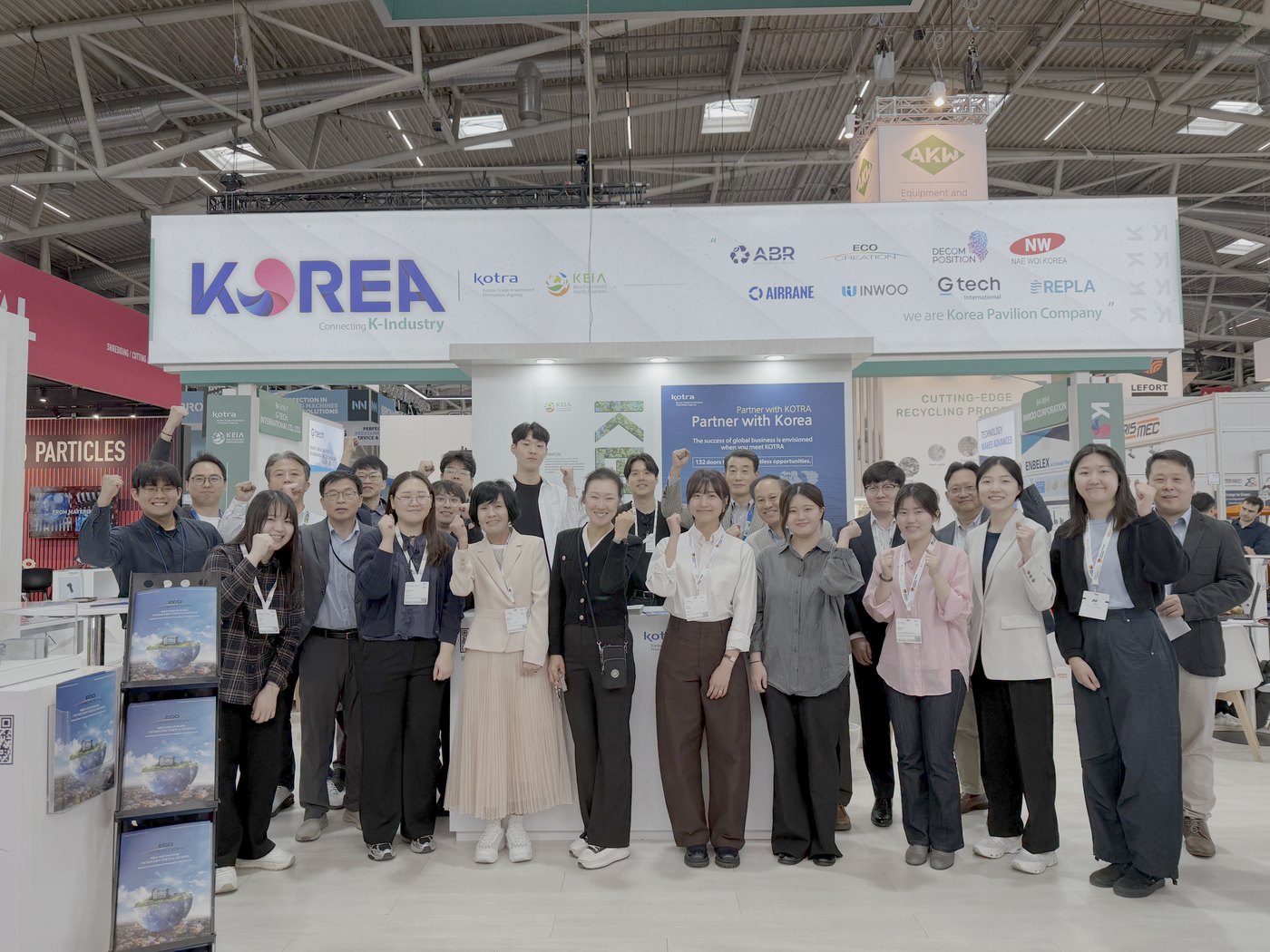
Decomposition Co., Ltd. is a deep-tech company in Pohang, on Korea's southeast coast. It builds tools to find microplastics and to remove them. For businesses and public agencies it sells a fluorescence-based detection kit and testing services. For consumers it sells under the 5mm brand: a home water testing service, a wash product that adsorbs microplastics, and, since October 2026, a probiotic made from a microbe the company found itself.
- Company: Decomposition Co., Ltd., CEO Choi Myung-hyun
- Founded: January 19, 2022
- Location: Heunghae-eup, Buk-gu, Pohang, Gyeongbuk, Korea
- Business: microplastic detection kits and testing services; plastic-degrading microbes; consumer products under the 5mm brand
- Backing: seed investment from CNT Tech; Korea's TIPS program for tech startups
- Channels: decomposition.co.kr, 5mmtest.com, Instagram @5mm_official
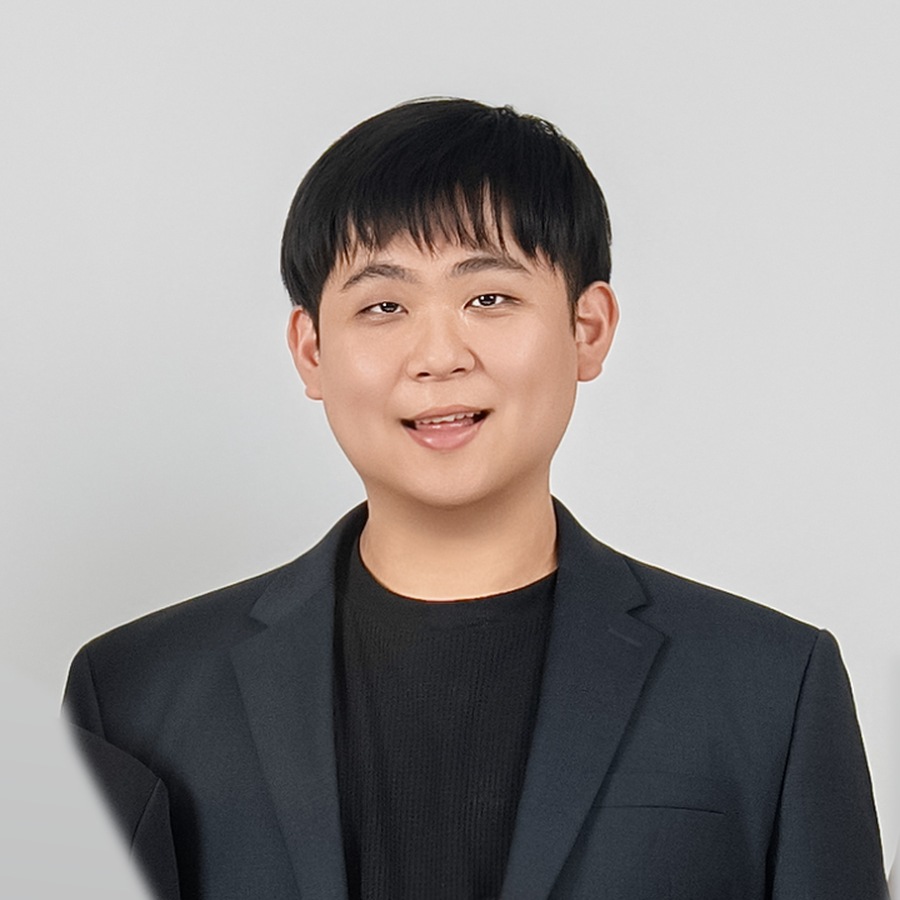
Choi Myung-hyun, CEO of Decomposition
Studied materials engineering and thin-film engineering in graduate school, working on polymer surfaces and the way they break down. He founded Decomposition in January 2022, two months before finishing his master's degree.
1. Why did you start Decomposition, and what was the turning point?
“The starting point was one question: what do we do about the plastic that has already entered our bodies? Most of the discussion about microplastics is about using less plastic, throwing away less and recycling more. That matters. But microplastics have already come into people through water, food and everyday products, and I could not find anyone answering what to do about what is already inside.”
“There was a more basic problem too. People had no practical way to know how much microplastic is in what they eat and drink. Analysis was possible only at a few specialized institutions with expensive equipment, and the cost and the waiting time were too much for an individual. A problem you cannot measure is a problem you cannot manage.”
“In graduate school I worked on the surface properties of polymers and on the breakdown that happens on a surface. I had not planned to study microplastics, but a microbe that grabs and breaks down plastic is also a surface reaction, so the gap did not feel like someone else's problem. I made an assumption: if there are microbes in nature that break down plastic, there may be microbes among those that are safe for people to eat that do the same job.”
“I decided this could not end with one paper. In January 2022, two months before my master's degree, I founded Decomposition in Pohang. Right after, we carried out our first government project, a kit-based service to diagnose microplastics in the gut. By the end of that year we had deposited a strain we found in doenjang, Korean fermented soybean paste, which laid the base for our work inside the body.”
“That is where the direction of the company was set. A removal technology means little without detection technology to prove it works, and detection alone changes nothing. That is why we have developed measurement and removal together since the first year.”
2. What do you sell, to whom, and what problem do you solve?
“Decomposition is a deep-tech company that protects human health from microplastics. We make products and services that confirm microplastics and remove them. Our customers fall into two groups: consumers, and companies and institutions.”
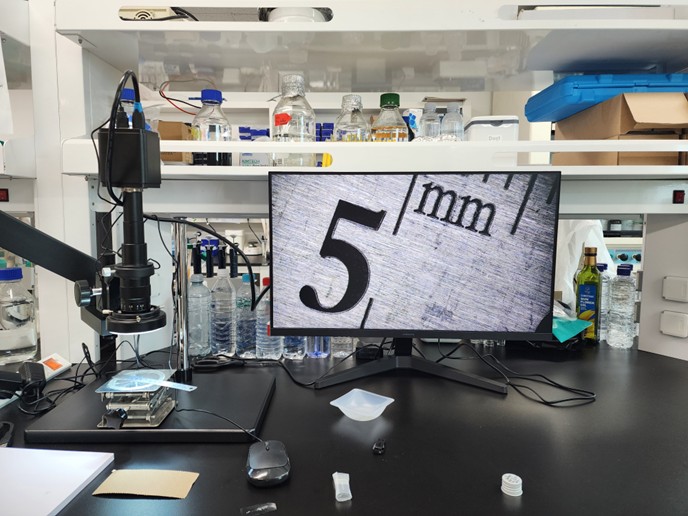
“For consumers we use the brand 5mm. Five millimeters is the size that defines a microplastic, and the name says that we want people to manage a risk they cannot see in their own daily lives. The first worry consumers feel is that they cannot tell whether what they use contains microplastics. So through our detection platform 5mmTest, anyone can have home water or everyday products tested at a modest cost. After you confirm, you need a way to respond. 5mm Wash adsorbs microplastics during washing and rinses them away, for the living environment outside the body. In October 2026 we launched 5mm LAB Plavabiotics, a step toward the inside of the body, built on a microbe we discovered ourselves. 5mm products are sold at Market Kurly, the Incheon Airport duty-free shops, our stores in Itaewon and Myeongdong in Seoul, and online.”
“For companies and institutions we provide detection kits and analysis services. Makers of food containers and water purifiers want to know whether their products release microplastics, but existing analysis is expensive and slow, and we carry out those test requests on a continuing basis. For water treatment companies we supply kits they can use on site, so they can check water quality regularly without expensive instruments. We also run a project with a public agency to detect and manage microplastics in seafood, and we apply the technology to water surveys in developing regions through overseas development cooperation projects.”
“We turn microplastics from a vague worry into a problem anyone can check and respond to.”
3. What is your core competitive advantage?
“Our biggest strength is that we own both the technology to detect microplastics and the technology to remove them. Most companies in this field focus on one side, analysis or reduction. Because the same research team develops both, we verify the performance of our removal materials with our own detection method, and we feed what we learn at detection sites back into material development.”
“The core of our detection technology is that it can quantify even nanoplastics in a simple way. Conventional analysis needs expensive spectroscopy and thermal analysis equipment and trained specialists, and the smaller the particle, the harder it is to measure. We devised a method that uses an enzyme we developed to break plastic down and reads the breakdown products as a fluorescent signal. It handles several samples at once without complicated pretreatment, and we confirmed high accuracy compared with analysis on expensive equipment. The research was published in Talanta, an international analytical chemistry journal, and the company holds the intellectual property on the enzyme and the method.”
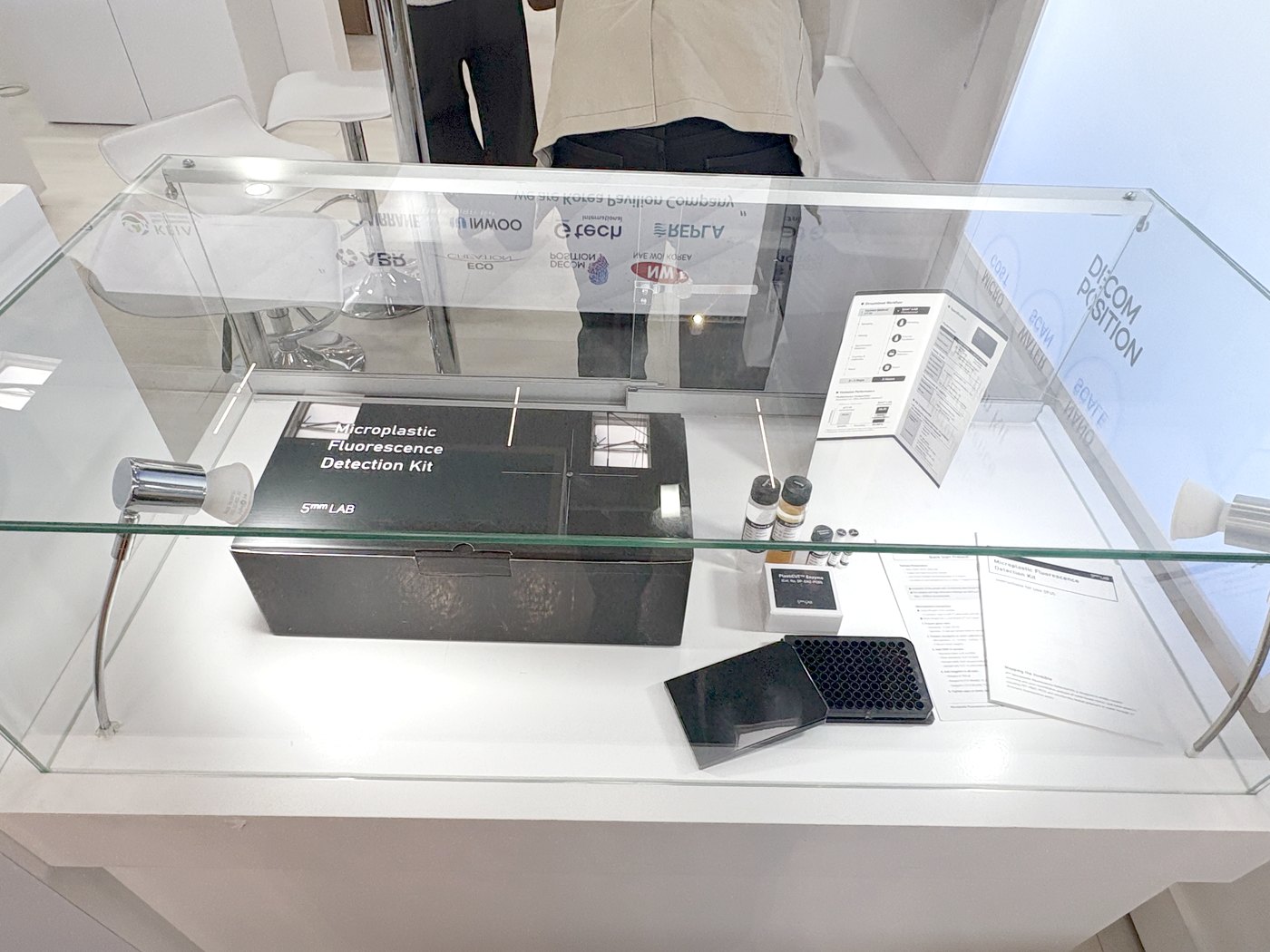
The company's own brochure compares the 5mm kit with conventional equipment such as FT-IR with a microscope. These are company-reported figures that I have not independently verified.
- Instrument price: about USD 14,000, against about USD 140,000
- Cost per test: USD 21 or less, against USD 210 to USD 2,100
- Time to result: 5 hours, against 3 to 7 days
- Parallel throughput: up to 70 samples, against 1 to 3
- Measurement range: no inherent lower limit, nanometer-capable, against 5 micrometers and above
- Agreement rate: 91.0 percent for Decomposition's fluorescence method, against 55.1 percent for conventional methods, as stated in the brochure
“On removal, the center is a strain we discovered, DCP04. Its ability to adsorb nanoplastics was published in the international journal Foods, and we secured a related patent. It is rare, in Korea or abroad, to approach the microplastic problem with a microorganism that people can safely consume.”
“Operationally, we have both a corporate research institute and our own manufacturing facility. We turn lab results into products ourselves instead of handing them to others, so the time from research to production and sales is short. In about five years since founding, we secured four SCI-level papers and many patents while also bringing consumer products to market, and this structure is why.”
4. What principles guide how you run the company?
“The value I care about most is that technology has meaning only when it reaches people's daily lives. I have seen many good research results stay inside papers. I want Decomposition's technology used in people's homes, at their tables and close to their bodies. So I ask the same questions when developing a product: can an ordinary consumer use this at home, and can they buy it without strain? And because confirming alone leaves only anxiety, our rule is to build a way to respond as well.”
“The second value is that everyone should be able to know. This became a conviction in April 2026, on a riverbank in Bekasi, Indonesia. While we were taking samples, children who live with their families under an underpass came over. I asked one boy to fetch some water for us, and he ran off smiling and brought back river water. It was the water his family uses every day. In a world where one test costs several hundred thousand won, knowing the condition of the water you use was a chance that would never come to that child. That is why we focus on lowering the cost of testing and making the kit simple. It is not only about a lower price. It is about giving people the right to know, whatever their means.”
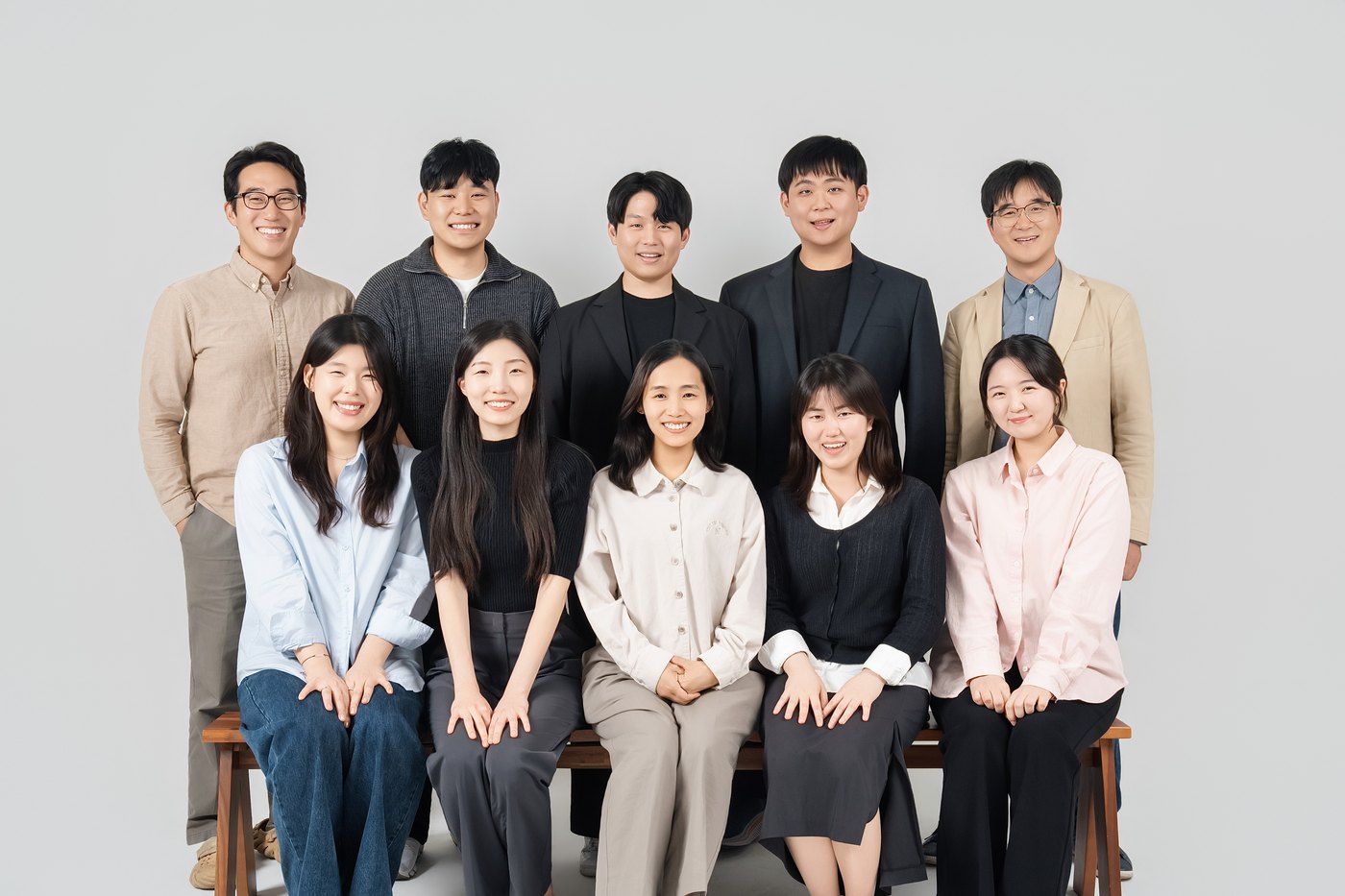
“It shows in our culture too. For technology to reach people, the people who build it have to grow first. Our researchers publish their own work under their own names in international journals, and they see for themselves how a lab result becomes a product on the market. Staff can pursue a graduate degree while working here. In a small company, I believe the people are the technology.”
5. What has been your most meaningful milestone?
“The biggest turning point was our detection kit entering the European market. A major European water treatment company started using our kit at its water management sites, and that led us to distribute in Europe. Water treatment is an industry that is very strict about accuracy and reproducibility. A technology from a small startup in Pohang being used at sites overseas gave me confidence that Decomposition can grow beyond Korea into a global technology company.”
“In Korea, working with the public sector became the base of the company. We have worked with leading Korean institutions and companies such as K-water, and with a research institute under a local government we hold separate contracts to detect microplastics in farmed seafood and to remove them. It was meaningful as the first case where our detection and removal technologies were used together at one site. Early on, seed investment from CNT Tech and TIPS, the government's flagship startup support program, helped us lay the base for commercialization.”
“The most memorable moment personally was the day in October 2026 when we launched 5mm LAB Plavabiotics. The question I asked when I started was what to do about plastic already in the body. From that question we found the strain, studied it, published the papers and finally made a product people can take every day. It took more than four years. When the assumption I made at the start passed through the lab and reached a real consumer's hand, the years connected into one. Plavabiotics is still at the food stage. We will keep building research data, including human studies, and aim to develop it into a microbe-based therapeutic. A launch is a beginning, and continuing to build a product with deeper evidence is the responsibility of the person who first asked the question.”
6. What are your plans for the next 3 to 5 years?
“Over the next three to five years the goal is to become the company the world market looks for first in microplastic detection and removal. I am planning along three lines: technology, market and data.”
“On technology, I want to extend detection to the human body. Today we mainly analyze water, food and everyday products. The next step is a test kit that measures micro- and nanoplastics in human samples such as blood and other body fluids. You have to be able to see how much is in your body before you can judge management and removal objectively. As detection reaches the body, our in-body solution research will become more precise too.”
“On the market, we are making Europe our base for global expansion, because rules and measurement demand on microplastics are moving fastest there. We are preparing joint research with local institutions, including Germany's Fraunhofer institute, and we plan to set up a European entity so that we can meet water treatment companies and research institutions directly as customers. In Korea we will extend the seafood and farm-produce verification work we do with public agencies to other regions and products, and through overseas development cooperation projects we will keep bringing our technology to places with limited access to testing.”
“On data, we will accumulate the measurements we have taken by region and sample type and grow them into a data platform where the state of microplastic pollution can be seen at a glance. The more data builds up, the more accurate information individuals get, and the more evidence-based management policy companies and governments get. To carry this out we are actively pursuing investment and strategic partnerships at home and abroad.”
7. What would you say to other founders, customers, partners and investors?
“For me, founding a company meant holding on to one question to the end. I did not start with the answer. There was a question nobody was answering, and I thought somebody had to find the answer. Sustainable growth, to me, is making the answer a little wider and deeper over time. We began by testing one cup of water. Now the answer reaches the living environment, the inside of the body, and overseas sites. When a company grows, more people become able to respond to the problem they face.”
“Looking back, Decomposition was not built alone. It exists because colleagues held the same question with me, and because people believed in the possibility from the very beginning. To founders walking a similar road, I hope you have people like that beside you.”
“To our customers, and to the partners and investors who noticed the potential of a small company early, thank you. Microplastics are not a problem one company can solve alone. The solution speeds up when researchers, companies, public institutions and each person who cares about everyday life work together. Decomposition will keep quietly doing the work of finding and removing the risks you cannot see.”
Company milestones, from the company brochure
2022: the company was incorporated in January, selected for the Didimdol R&D program and the Innovation Startup Package in April, set up its R&D center in August, signed an MOU with the Korea Microplastics Research Institute in October, and deposited two novel strains with KRIBB (the Korea Research Institute of Bioscience and Biotechnology) in December.
2023: venture company certification in January, a patent filed for the detection kit in April, and in May the opening of its hygiene product manufacturing facility, selection for the Initial Startup Package and a Grand Prize for Green Energy Excellence.
2024: selected as an Eco-Startup by the Ministry of Environment and for the Ministry of Oceans and Fisheries acceleration program, Top Prize at the Gyeongbuk Startup Awards (Governor's Award), a closed seed round in August, TIPS in September, and patents filed for a nylon detection device and a fluorescence-based detection device.
2025: two patents granted for plastic-degrading microbial strains in April, selection as a K-water Partner Startup in May, designation as a Pre-Promising Small Giant by Pohang City in July, launch of the 5mm brand in August and of the Microplastic Detection Service in December. These dates come from the company's brochure.
Notes from the interviewer
Three things stood out to me as an outside reader. First, the company is built around one loop: the same team makes the detection method and the removal material, so each proves the other. Second, the kit is priced and sized for places that cannot afford a lab, from a Bekasi riverbank to a European treatment plant, which gives it a wider customer base than a research instrument would have. Third, the next steps are concrete: blood and body-fluid testing, a European entity, joint research with Fraunhofer, and a regional data platform. Before a first meeting, I would ask for the independent validation behind the 91.0 percent agreement figure, the name and scope of the European customer, regulatory acceptance of the method in the EU, production capacity for the kit, and the sales split between kits, services and consumer products. These are my own suggestions, not claims by the company.
Want an introduction to Decomposition?
If you are a water treatment company, distributor, research institute, brand or investor interested in Decomposition, email yooharmonizer@gmail.com. I will connect you with the Decomposition team.