Korea Market Entry / Insights
Korea startup ecosystem · 10 min read
Korea's Startup Ecosystem Explained: Government Programs, TIPS, Tech Listing and Who Funds What
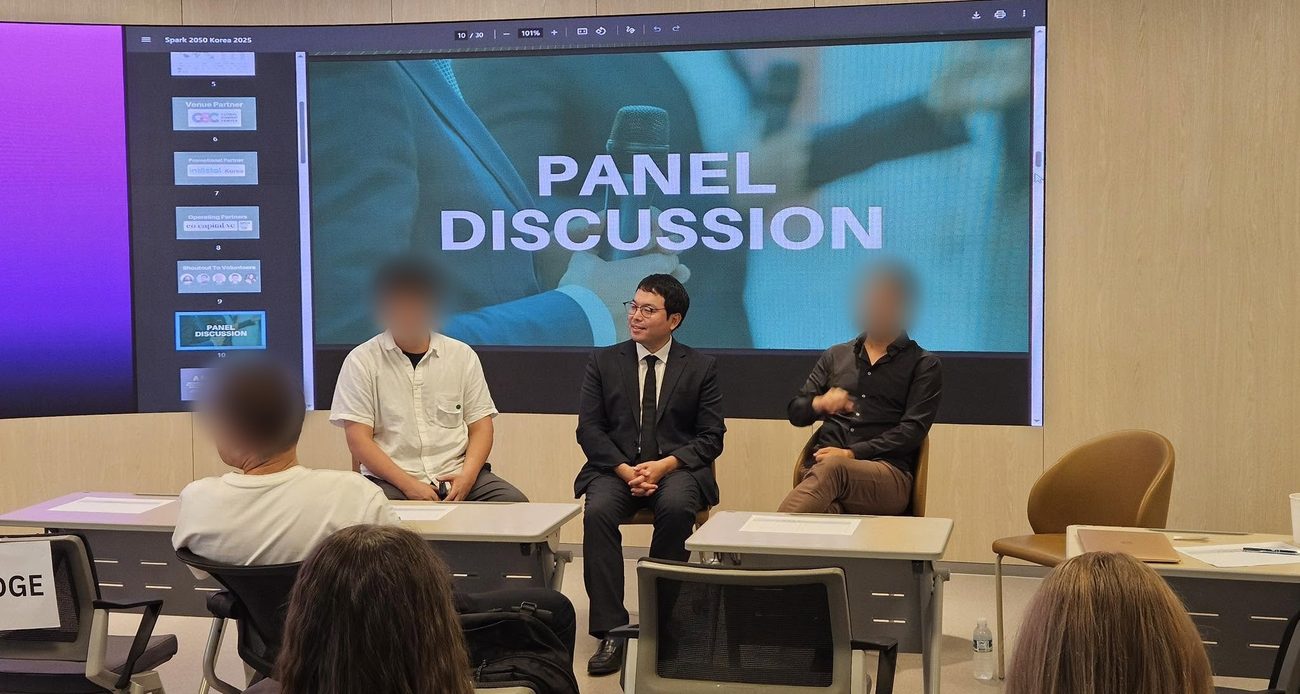
Foreign founders often ask me one question before anything else: who actually funds startups in Korea? The honest answer starts with the government. Public money sits behind programs, guarantees, funds of funds and regional centers, and private investors, from venture capital firms to corporate arms and accelerators, work on top of that base. The exit side is slower than in the United States, which shapes how everyone behaves. This guide explains the main pieces in plain terms, with the numbers I could verify from published sources and three recent large deals. I am writing from Seoul, where I mentor founders as part of Founder Institute Korea.
01
Start with the idea that the government leads
In most ecosystems, private investors move first and the state follows. In Korea, public institutions design much of the structure. The Ministry of SMEs and Startups sets policy and designs programs. The Korea Venture Investment Corporation manages the Korea Fund of Funds, which puts capital into private venture funds instead of investing directly in startups. KoreaTechDesk reports that the Ministry planned about KRW 4.4 trillion in new venture funds in 2026, supported by KRW 2.1 trillion from the fund of funds. A report on Korean venture firms in August 2025 said state-backed policy capital made up 16.7 percent of newly raised venture funds in 2023 and 23 percent in 2024, and more than a quarter of the market when pension funds and mutual aid associations are counted. For a foreign founder, the practical meaning is that many Korean investors are shaped by public programs, and many programs are open to you if you understand the entry rules.
02
TIPS: private money first, then government R&D
TIPS is the program most founders hear about first. It started in 2013 and uses a private-first model: an accredited investor, often an accelerator or venture firm, invests in a startup first, and then the government adds R&D and commercialization funding. KoreaTechDesk reports that TIPS has supported more than 4,400 startups and has attracted over KRW 20 trillion in follow-on private investment. In December 2025, the Ministry announced a 2026 expansion: about 800 startup-stage projects, 300 scale-up projects, a general track maximum of KRW 800 million over two years, and a new Global TIPS track with up to KRW 6 billion for companies that secure overseas investment in advance. At least half of general and scale-up projects are to go to startups outside the Seoul region. Check the current terms with the operator you are speaking to, because amounts and eligibility change from year to year.
03
KODIT and KIBO: guarantees instead of equity
Not all public money is equity. Two guarantee institutions matter. The Korea Credit Guarantee Fund (KODIT) guarantees the loans of small and medium companies that lack collateral. If the borrower cannot repay, KODIT pays the bank. KODIT states that the general limit, combined with the Korea Technology Finance Corporation, is KRW 3 billion and can reach KRW 7 billion depending on the company and fund type. The guarantee covers a share of the loss, usually 70 to 85 percent, and special guarantees for startups and exporters can reach 90 to 100 percent. Annual fees range from 0.5 to 3.0 percent. The Korea Technology Finance Corporation (KIBO) works on the same principle but decides on the technology: it assesses whether the technology and project are viable, then issues a guarantee letter so a bank can lend. For a deep tech startup with a patent and no assets, a KIBO guarantee can matter as much as a venture round.
04
Creative economy and innovation centers across the country
Korea has 19 Centers for Creative Economy and Innovation (CCEI), spread across cities and provinces and run by the Korea Institute of Startup and Entrepreneurship Development. The first opened in Daegu in September 2014. Each center is linked with the networks of large corporations, and offers consulting on law, patents and finance, mentoring, office space, equipment rental and introductions to programs. Eligibility is generally for startups younger than three years. The centers are one reason startup activity is not limited to Seoul. For a foreign founder who wants a pilot with a regional manufacturer or a university, the local center is often the best first call, because its staff know the local companies and programs.
05
The OASIS pathway for foreign founders
If you want to live in Korea and run your company, the technology startup visa D-8-4 is the route built for foreigners, and it runs on a points system supported by the OASIS program. Published guides state that applicants need 80 points out of 368, a degree or a recommendation from a government agency, and a newly established Korean corporation. Points come from education, Korean language ability, intellectual property and OASIS courses. OASIS-1 is an 18-hour course worth 15 points and OASIS-2 is a 25-hour course worth 25 points, both with an 80 percent attendance requirement. The guide I reviewed also states that permanent residence requires three years of D-8-4 status, KRW 300 million of investment or capital and two Korean employees for six months. Immigration rules change often, so confirm every number with Hi Korea or an immigration lawyer before you plan around it.
06
Venture capital, corporate VC and accelerators
On the private side, Korea has a large number of investors. KoreaTechDesk reports that in 2025, 114 of the country's 444 venture capital firms were classified as corporate venture capital, and they invested about KRW 2.9 trillion, 21.3 percent of the KRW 13.6 trillion total venture investment that year. Corporate investors usually need both a financial case and a business case: the startup must be worth investing in, and the partnership must be workable inside the parent company. Accelerators are the early layer. A report from September 2026 found that 32 firms held both accelerator and venture licenses in the first half of 2025, up from 23 at the end of 2023. Accelerator investment in 2024 reached USD 648.3 million across 2,476 deals, with an average deal of about USD 265,000. For you, the useful point is that an accelerator is often the entry door to TIPS and to later investors, which is why mentors and programs such as Founder Institute matter at the earliest stage.
07
Why IPOs and exits take so long
Korea does not offer an easy exit. A VC partner in Seoul told KED Global in August 2025, "There are simply no exits." In the first half of that year, applications for Korea Exchange IPO review fell almost 40 percent to 53, and the number of seed to Series A deals fell nearly 43 percent to 338. About 17 percent of licensed VC firms reported no investments in the half year. M&A is limited, since large groups have historically been cautious acquirers. The result is that investors hold longer, and founders and funds need patience. This is also why government structures, from TIPS to guarantees, carry so much of the early load.
08
Technology special listing: the path for deep tech
The main answer to the exit problem is the KOSDAQ technology special listing track, introduced in March 2005. It lets companies list on the basis of technology evaluation by approved agencies, even before they show profits. Seoul Economic Daily reported that Skylabs became the 300th company to list through the track on September 4, 2026. The 300 companies have raised a combined KRW 8 trillion, and the track accounted for 52.4 percent of the market value of new KOSDAQ listings in 2025. It began with biotech and now includes AI, semiconductors, space and defense. The bar is rising, however. In April 2026, the Korea Exchange reduced the number of technology evaluation agencies from 26 to 16, and reports said companies were told to aim for a market value of at least KRW 100 billion at the offering price. Some companies received weaker grades and postponed their listings. If you invest in Korean deep tech, assume the listing path is open but selective.
09
Three recent large deals that show how the pieces fit
First, Rebellions, an AI chip company, announced a pre-IPO round of about USD 400 million on March 30, 2026, led by Mirae Asset and the Korea National Growth Fund, with funds going to expansion in the United States. Outlets report slightly different amounts and valuations, from about USD 400 million to USD 435 million, so check the latest figure before quoting it. The national fund taking a lead role shows how the public and private sides now work together. Second, WIRobotics raised about KRW 95 billion (about USD 68 million) in a Series B in May 2026, led by JB Investment with nine other investors, after a KRW 13 billion Series A in March 2024. The company reports that more than 3,000 units of its wearable walking robot have been sold, with sales in Europe, China, Türkiye and Japan, and is setting up a North American entity. Third, Point2 Technology, which builds radio-frequency interconnects for AI data centers, extended its Series B to bring total funding to USD 76 million, with Maverick Silicon leading and NVentures, the venture arm of Nvidia, and UMC Capital participating. The three deals show a domestic public-private lead, a domestic investor group backing a company with global sales, and a foreign strategic investor.
10
What this means for a foreign founder
Three practical conclusions follow. First, public programs are not a side topic in Korea. They are part of the funding stack, so learn TIPS, the guarantee schemes and the regional centers early. Second, expect investors to ask how you will serve Korean customers and who in Korea will run the relationship, because the ecosystem rewards teams that stay. Third, build your story for the exit environment: investors are patient but need a clear reason why your company can reach the public market or a strategic buyer. If you are sorting out where to start, I suggest a 90-day plan: week 1 to 4, talk to one accelerator and one regional center; week 5 to 8, run one pilot with a Korean company; week 9 to 12, bring that pilot to two investors.
A quick self check
- Do I know which public programs match my stage, such as TIPS or a regional center?
- Have I confirmed current visa rules on Hi Korea instead of relying on a blog?
- Do I have one Korean pilot or customer to show an investor?
- Have I separated my pitch for venture capital from my pitch for a corporate investor?
- Do I have a patient plan for a market where exits are slow?
Where to go next
Related reading: how foreign startups raise from Korean investors, entering Korea without a local entity, a profile of Persona AI and its funding history and how to source Korean startups.
What we offer
- B2B trust building and partner development strategy consulting for foreign startups and companies entering the Korean market
- LinkedIn company branding, content strategy, and overseas buyer and partner development support for Korean startups expanding abroad
- B2B marketing lectures, seminars, and hands on consulting for corporate and government backed programs
Contact: yooharmonizer@gmail.com