Korea Market Entry / Insights
Accelerator programs in Korea · 9 min read
How to Run a Korea Program or Demo Day as a Foreign Accelerator: What Korean Founders Actually Need
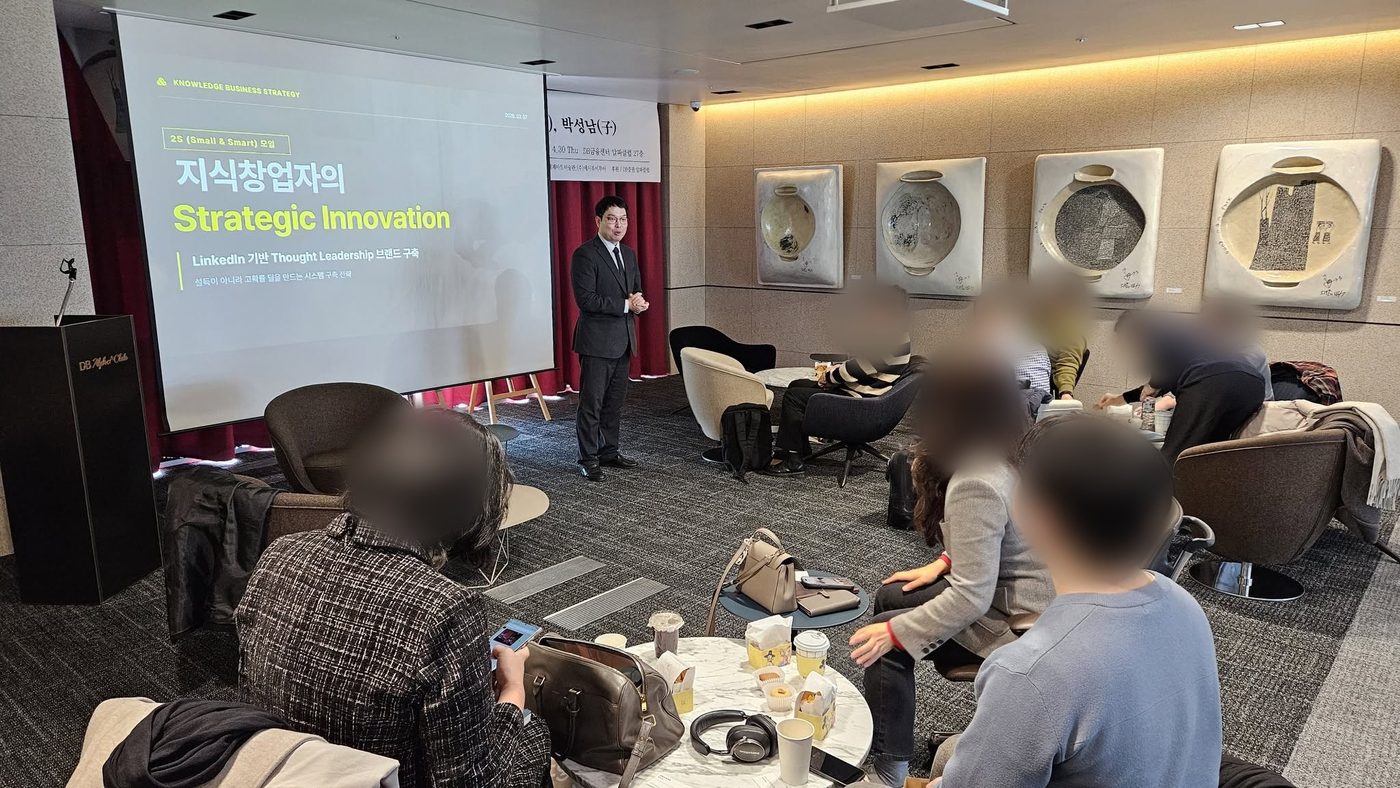
Korean founders are strong on product and engineering, and many want to sell and raise money abroad. That makes a Korea cohort or Demo Day attractive to foreign accelerators. But most programs I see copy a generic curriculum and end with a stage event and photos. This guide describes what Korean founders actually need from a foreign accelerator, how to select a cohort, a ten-week structure that respects their time, and how to run a Demo Day that produces meetings and pilots.
01
Two different jobs that people mix up
When a foreign accelerator says it wants a Korea program, it can mean two things. The first is bringing foreign startups into Korea, which the Korean government already supports through programs such as K-Startup Grand Challenge. The second is working with Korean startups and helping them go abroad. This guide is about the second job.
I coach Korean startups in government-backed global programs, teach English pitching and LinkedIn outreach for founders, and mentor at Founder Institute Korea. The pattern I see is stable: Korean founders are strong on product and engineering, and weak on the parts that happen outside Korea, such as foreign sales calls, foreign investor conversations and local proof in a new market. An accelerator that fills those gaps is useful. One that repeats generic content is not.
02
What Korean founders actually need from you
- English sales and pitch coaching with live practice. Slides are usually fine. The spoken story, the answers to hard questions and the follow-up email are where founders lose deals.
- Introductions to real customers and investors in your market. A name on a list helps little. A warm introduction to a person who has a budget helps a lot.
- Local proof: a pilot, a case study or a reference customer in your country, which they can use in the next conversation.
- A clear picture of what your country requires: certifications, distribution routes, payment and legal basics.
- Speed. Founders in Korea juggle government reports, customers and fundraising. A program that asks for ten hours a week of homework will lose them.
Notice what is missing from the list: a large amount of generic startup curriculum. Most Korean founders have already been through several government and corporate programs. They will join yours for access, not for lectures.
03
How to select a Korean cohort
Selection decides most of the outcome. A weak cohort cannot be rescued by a good program.
- Stage: choose startups that already have a product and at least a few paying customers or pilots in Korea. A pre-product team needs a different program.
- Revenue source: ask how much revenue comes from customers and how much from grants. Grants fund development well, but a team with only grant income has not yet tested a market.
- English readiness: someone on the team must be able to run a call in English without a translator. If nobody can, add a language track or choose a different team.
- Decision maker: the founder or a co-founder with authority must attend. A junior representative cannot commit to a pilot.
- Sector fit: pick startups in areas where your network actually has customers. Fifteen weak matches are worse than five strong ones.
- Reason to go abroad: ask why this market and why now. A good answer names a customer, a distributor or a regulation, not a general ambition.
Keep the cohort small, between five and ten teams. Small enough that you can introduce each one personally.
04
A ten-week program that respects founders' time
| Weeks | Focus | Output |
|---|---|---|
| 1 to 2 | Market brief for your country, customer profile, English pitch review | Target list of 20 buyers or investors per team |
| 3 to 4 | English sales calls, cold outreach and follow-up practice | Outreach sent, replies tracked |
| 5 to 6 | Warm introductions, first meetings by video, feedback on each call | At least 3 real meetings per team |
| 7 to 8 | Pilot or partnership proposal, local proof, regulatory basics | One written proposal per team |
| 9 to 10 | Demo Day preparation, investor and customer matching | Meeting schedule for Demo Day |
Keep the weekly time under three hours per founder, mostly live sessions and calls. Give each team one named contact on your side, so they do not have to figure out who to ask.
05
How to run a Demo Day that produces results
A Demo Day that is only a stage show leaves everyone with photos and no business. Treat it as a meeting event with a short stage portion.
- Invite a small, specific audience: customers, partners and investors who match the cohort. Fifty relevant people beat three hundred random ones.
- Give each team five minutes on stage in English, with a clear ask, such as a pilot site or an introduction to a distributor.
- Schedule 1:1 meetings after the pitches, with fixed time slots. This is where deals start.
- Ask Korean founders to prepare a one-page English summary with price, proof and the next step.
- Send a follow-up within 48 hours to everyone who attended, with each team's one-pager and contact.
Measure the result in 30 and 90 days: meetings held, pilots agreed, investor conversations continued, and revenue from a new market. Publish the numbers. Founders and future partners will trust a program that reports honestly.
06
Do not duplicate what the Korean government already offers
Korea has a dense set of public programs. The Ministry of SMEs and Startups runs K-Startup Grand Challenge, managed by KISED, which brings foreign startups to Korea and offers workspace, visa help, proof-of-concept opportunities with large Korean companies and prize money. Korean agencies also publish open calls for overseas accelerators, for example a 2024 notice titled Recruitment of Overseas Accelerators for 2024 Global Market Expansion Program. Check the current terms directly, because they change each year.
The practical point is simple. Korean founders already receive grants and basic support. Your value is the part the government program cannot give: your own customers, your investors, your language and your local credibility. Say that clearly in your recruiting message.
If you can, connect your program to existing public programs instead of competing with them. A Korean team that is already in a government global program may be glad to use your market access as the next step.
07
Choose a local partner who can run the Korean side
Even a good foreign accelerator needs someone on the ground in Seoul. The partner recruits teams, checks facts in Korean, handles logistics and follows up with founders after the program ends.
- Look for a small team or an individual who has run programs before, not only a famous organization.
- Ask for two references from founders or institutions that worked with them.
- Agree on who owns the cohort relationships after the program ends.
- Write down the follow-up plan: who contacts which team after 30, 60 and 90 days.
My article on choosing a Korean partner explains why a small team often works better than a large name.
08
Common mistakes
- Recruiting by name instead of by fit. A famous Korean startup may not need you.
- Filling the schedule with lectures that founders already know.
- Skipping Korean-language materials for Korean investors and customers who join the Demo Day.
- Treating the Demo Day as the end. The follow-up weeks decide the outcome.
- Promising investment outcomes. Promise introductions and learning, and deliver them.
09
How I can help
I work with accelerators, universities and corporate programs that want to build a Korea track: selecting teams, English pitch and sales coaching, LinkedIn outreach, and investor and buyer introductions through my network of about 36,000 followers. If you are planning a cohort or a Demo Day, send me the stage, the sectors and the timeline. I can tell you what a realistic Korean cohort looks like and how to run it.
A quick self check
- Is my program built for Korean founders going abroad, not for foreign startups coming in?
- Did I select teams by revenue source, English readiness and decision maker?
- Is the weekly time under three hours per founder?
- Does my Demo Day include scheduled 1:1 meetings after the pitches?
- Do I have a named local partner and a 30, 60, 90 day follow-up plan?
Sources
- Business Wire, K-Startup Grand Challenge 2026 (June 2026): run by the Ministry of SMEs and Startups, managed by KISED.
- K-Startup Grand Challenge, background and structure.
- KISED notice, Recruitment of Overseas Accelerators for 2024 Global Market Expansion Program (check current KISED and K-Startup pages for the latest call).
Where to go next
Related reading: how to find great Korean startups by sector, how foreign investors and accelerators source Korean startups, how to choose a Korean partner and Korea's startup ecosystem explained.
What we offer
- B2B trust building and partner development strategy consulting for foreign startups and companies entering the Korean market
- LinkedIn company branding, content strategy, and overseas buyer and partner development support for Korean startups expanding abroad
- B2B marketing lectures, seminars, and hands on consulting for corporate and government backed programs
Contact: yooharmonizer@gmail.com